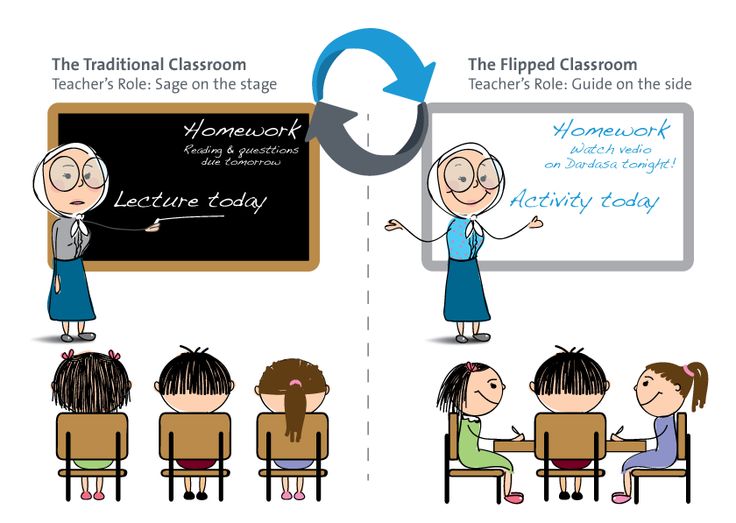
The role of teachers in a constructive classroom is different from that in the traditional classroom. Traditionally, teacher dominance atmosphere that teachers as a supervisor who focused on rote learning and memorization. On the contrary, in constructive classroom teachers as support and monitor provide their students with more space to explore and interact knowledge and surroundings that can contribute to most effective for the stage of advanced knowledge acquisition. Thus, it is necessary for teachers to locate their role in both classrooms, which means that to better support students, teachers need to know how they can transform their role from teacher-center to students-center effectively and what has changed for them.
To start with, teachers will be aware of less lecture and more students talk that is the good start of implementing students-center teaching. To be more specific, when teachers transfer voice to students, the teacher can listen to students language which can help teachers find an appropriate pace and ways to design a lesson plan that is acceptable to the students. Therefore, the transformation of consciousness of teachers is the foundation to promote constructive classroom.
Besides, the increasing number of sharing reflection and providing feedback from teachers. Based on constructive theory, in order to help students reproduce what they know, teachers will evaluate, align and design experience for students (Ertmer & Newby, 1993). All these actions could go through the reflection and feedback of teachers. Furthermore, this is a way to present teachers as more approachable that can improve the relationship between teachers and students. It is useful to coordinate the issue of classroom management which is caused by changing from traditional classroom to constructive one and promote high levels of interaction and activity.
Basically, those two points above could be the obvious transformation from teachers, when they alter the teachers-center teaching to students-center teaching.
Reference:
Ertmer, P. A., & Newby, T. J. (1993). Behaviorism, cognitivism, constructivism: Comparing critical features from an instructional design perspective. Performance improvement quarterly, 6(4), 50-72.

 The constructivism and traditional class